Buy icr.co.at ?
We are moving the project
icr.co.at .
Are you interested in purchasing the domain
icr.co.at ?
domain@kv-gmbh.de · 0541-91531010
Buy icr.co.at ?
What is differential covariance?
Differential covariance refers to the difference in the covariance between two variables across different groups or conditions. It is used to assess whether the relationship between two variables varies depending on different levels of a third variable. This can help to identify how the strength and direction of the relationship between two variables may change under different circumstances or conditions. Differential covariance is important in understanding how different factors may influence the relationship between variables in a given context. **
How can one annualize covariance?
To annualize covariance, you would first calculate the covariance between two variables over a specific time period. Then, you would multiply this covariance by the number of periods in a year to adjust for the fact that the original calculation was based on a shorter time frame. This helps to provide a more meaningful comparison of the relationship between the variables on an annual basis. Finally, annualizing covariance allows for better understanding and comparison of the risk and return characteristics of different assets or portfolios over time. **


Similar search terms for Covariance
Top-Angebote
Products related to Covariance:
-
Sesderma Reti Age 5 Liposomal Serum Anti-Aging Innovation 30mLA facial serum for wrinkles and signs of ageing. Reduces wrinkles and fine lines. Hydrates and strengthens barrier. Restores youthful radiance. 5-Retinoid System: smooths wrinkles, accelerates renewal, and boosts collagen. Biomimetic Peptides: fill expression lines by stimulating collagen synthesis.53,26 £*Shipping: 5,22 £Secure redirect to the provider
-
Flythe Consulting Arika Wall Sconce Pair, Pair, Satin NickelThe Arika Wall Sconce Pair is an adaptation of old-fashioned light fixtures, with an appealing design that will complement modern decor. The lacquered solid brass sconces have 4.75 dia.x7 H clear glass hurricanes that will protect your standard...179,00 $*Shipping: 22,95 $Secure redirect to the provider
-
Flythe Consulting Manor Wall Sconce Pair, Pair, Satin NickelHandcrafted of solid brass, the Manor Wall Sconce Pair features a curved arm design and a lacquered hand-finish. Each 4.75 dia.x7 H glass hurricane protects your taper from drafts. Each decorative wall sconce is 4.5 Wx7 Dx15 H. This item is our...169,00 $*Shipping: 22,95 $Secure redirect to the provider




-
How do you calculate covariance?
Covariance is calculated by taking the average of the product of the deviations of each variable from their respective means. The formula for calculating covariance between two variables X and Y is: Cov(X,Y) = Σ[(X - μx)(Y - μy)] / n, where μx and μy are the means of X and Y, and n is the number of data points. A positive covariance indicates that the two variables tend to move in the same direction, while a negative covariance indicates that they tend to move in opposite directions. **
-
How do I determine the covariance?
Covariance is a measure of how two variables change together. To determine the covariance between two variables, you first need to calculate the mean of each variable. Then, for each pair of data points, you subtract the mean of each variable from the data point and multiply these differences together. Finally, you sum up all these products and divide by the total number of data points to get the covariance. A positive covariance indicates that the variables tend to move in the same direction, while a negative covariance indicates they move in opposite directions. **
-
What is independence and covariance in statistics?
Independence in statistics refers to the concept that the occurrence of one event does not affect the occurrence of another event. In other words, two events are independent if the probability of one event occurring does not change based on the occurrence of the other event. Covariance, on the other hand, measures the degree to which two random variables change together. It is a measure of the relationship between two variables, indicating whether they tend to increase or decrease together. A positive covariance indicates that the variables tend to move in the same direction, while a negative covariance indicates that they tend to move in opposite directions. **
-
What is the difference between contra and covariance?
The main difference between contra and covariance is the way they measure the relationship between two variables. Contra indicates an inverse relationship, meaning that as one variable increases, the other decreases. On the other hand, covariance measures the direction of the relationship between two variables, whether it is positive or negative. Contra is specifically used to describe the relationship between two securities in a portfolio, while covariance is a more general measure of the relationship between any two variables. **
Do outliers affect covariance, the correlation coefficient, or both?
Outliers can affect both covariance and the correlation coefficient. Outliers can have a significant impact on the covariance because they can pull the mean away from the center of the data, leading to a larger covariance value. Similarly, outliers can also influence the correlation coefficient by skewing the relationship between the variables, potentially increasing or decreasing the strength of the correlation. Therefore, it is important to be aware of outliers when interpreting covariance and correlation values. **
Is the square root of the covariance the variance?
No, the square root of the covariance is not the variance. The square root of the covariance is the correlation coefficient, which measures the strength and direction of the linear relationship between two variables. The variance, on the other hand, measures the spread or dispersion of a single variable. While both the covariance and variance are measures of variability, they are calculated and interpreted differently. **
Top-Angebote
Products related to Covariance:
-
Board and Dice Nucleum Energy Research Institute Board Game - Strategic Economic Board Game with Energy Networks and Research DevelopmentBuild an industrial empire in an alternate twentieth century transformed by the Uranium Revolution. Compete to develop powerful energy networks, attract investment, and earn the support of influential patrons. Plan routes, expand research, and connect cities as you develop increasingly ambitious technologies. Every decision affects progress, from constructing facilities to pursuing contracts and partnerships. Resource management and long-term planning are essential to succeed.23,20 £*Shipping: 3,95 £Secure redirect to the provider
-
SAGE Publications Case Study Research and Applications: Design and MethodsRecognized as one of the most cited methodology books in the social sciences, the Sixth Edition of Robert K. Yin′s bestselling text provides a complete portal to the world of case study research. With the integration of 11 applications in this edition, the book gives readers access to exemplary case studies drawn from a wide variety of academic and applied fields. Ultimately, Case Study Research and Applications will guide students in the successful use and application of the case study research method.59,99 £*Shipping: 0,00 £Secure redirect to the provider
-
Sesderma Reti Age 5 Liposomal Serum Anti-Aging Innovation 30mLA facial serum for wrinkles and signs of ageing. Reduces wrinkles and fine lines. Hydrates and strengthens barrier. Restores youthful radiance. 5-Retinoid System: smooths wrinkles, accelerates renewal, and boosts collagen. Biomimetic Peptides: fill expression lines by stimulating collagen synthesis.53,26 £*Shipping: 5,22 £Secure redirect to the provider
-
What is differential covariance?
Differential covariance refers to the difference in the covariance between two variables across different groups or conditions. It is used to assess whether the relationship between two variables varies depending on different levels of a third variable. This can help to identify how the strength and direction of the relationship between two variables may change under different circumstances or conditions. Differential covariance is important in understanding how different factors may influence the relationship between variables in a given context. **
-
How can one annualize covariance?
To annualize covariance, you would first calculate the covariance between two variables over a specific time period. Then, you would multiply this covariance by the number of periods in a year to adjust for the fact that the original calculation was based on a shorter time frame. This helps to provide a more meaningful comparison of the relationship between the variables on an annual basis. Finally, annualizing covariance allows for better understanding and comparison of the risk and return characteristics of different assets or portfolios over time. **
-
How do you calculate covariance?
Covariance is calculated by taking the average of the product of the deviations of each variable from their respective means. The formula for calculating covariance between two variables X and Y is: Cov(X,Y) = Σ[(X - μx)(Y - μy)] / n, where μx and μy are the means of X and Y, and n is the number of data points. A positive covariance indicates that the two variables tend to move in the same direction, while a negative covariance indicates that they tend to move in opposite directions. **
-
How do I determine the covariance?
Covariance is a measure of how two variables change together. To determine the covariance between two variables, you first need to calculate the mean of each variable. Then, for each pair of data points, you subtract the mean of each variable from the data point and multiply these differences together. Finally, you sum up all these products and divide by the total number of data points to get the covariance. A positive covariance indicates that the variables tend to move in the same direction, while a negative covariance indicates they move in opposite directions. **
Similar search terms for Covariance
-
Flythe Consulting Arika Wall Sconce Pair, Pair, Satin NickelThe Arika Wall Sconce Pair is an adaptation of old-fashioned light fixtures, with an appealing design that will complement modern decor. The lacquered solid brass sconces have 4.75 dia.x7 H clear glass hurricanes that will protect your standard...179,00 $*Shipping: 22,95 $Secure redirect to the provider
-
Flythe Consulting Manor Wall Sconce Pair, Pair, Satin NickelHandcrafted of solid brass, the Manor Wall Sconce Pair features a curved arm design and a lacquered hand-finish. Each 4.75 dia.x7 H glass hurricane protects your taper from drafts. Each decorative wall sconce is 4.5 Wx7 Dx15 H. This item is our...169,00 $*Shipping: 22,95 $Secure redirect to the provider
-
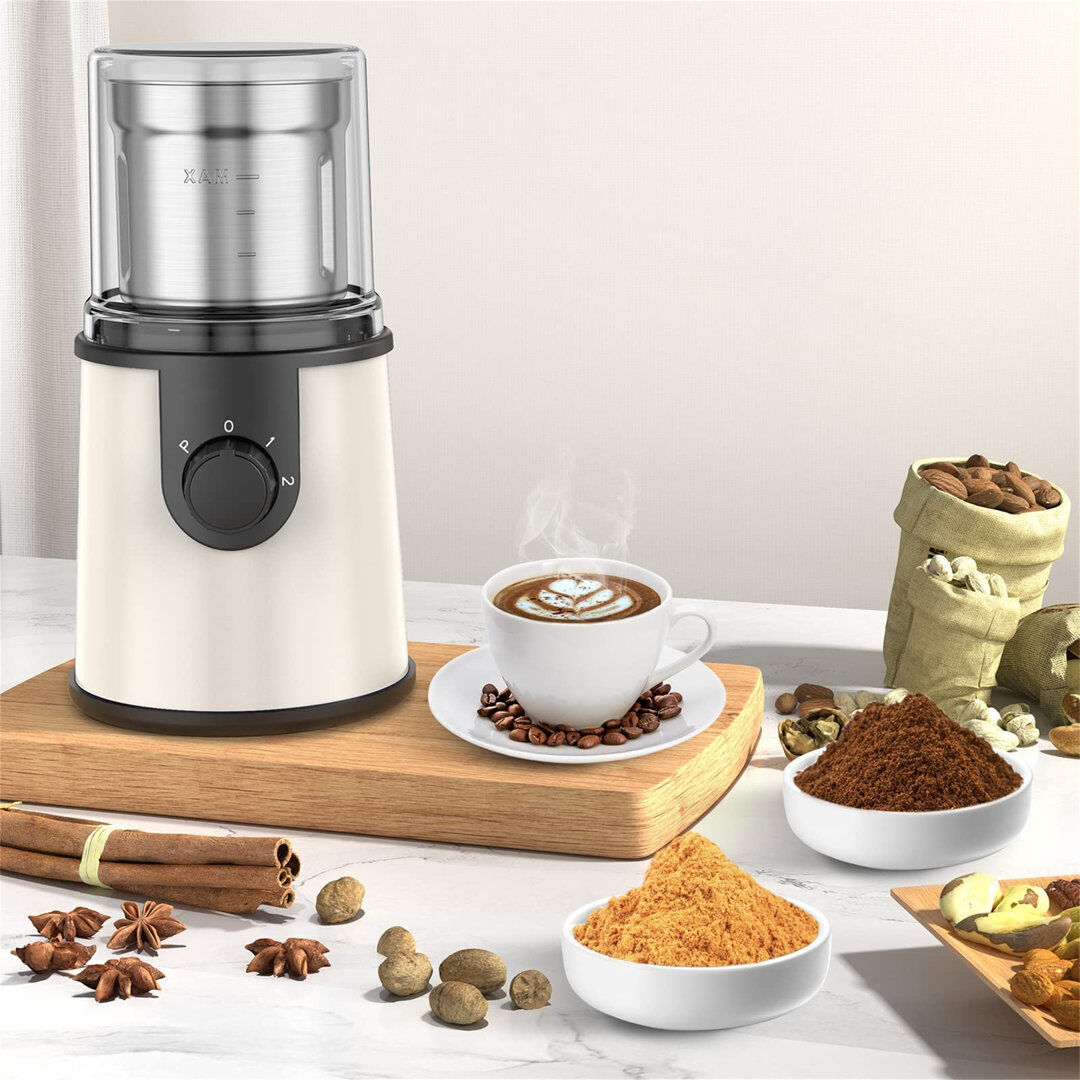
Chengdu Menghejia Technology Co., Ltd. Stainless Steel Electric Blade Coffee Grinder White 0mlThis electric coffee grinder is equipped with a 350W motor and SUS 304 stainless steel blades, which can complete the grinding task at a speed of 26000r/min in 5-20 seconds. The powerful motor can also easily handle larger and harder items, such as nuts, chia seeds and even nutmeg. The built-in overheat protection design prolongs its service life. This electric spice grinder has 2 grinding speed levels and 1 pulse mode (P). You can grind the ingredients that suit your taste as needed with a simple turn of the button.. This coffee grinder has a removable grinding bowl. Whether you want to mix whole spices or marinades, from delicate dried mint to fennel to pepper, this spice grinder is the best choice.. This electric spice grinder only works when the grinding bowl is locked in place and the lid is properly placed on the bowl.. This grinder is designed with a rubber seal to prevent the ground ingredients from flying out when the blade rotates. The base is equipped with non-slip rubber feet for good heat dissipation. The rubber layer can insulate.. The electric coffee bean grinder is equipped with a detachable grinding bowl, which allows you to easily pour out the powder and clean it with water. Equipped with a convenient double-headed brush spoon. The electric coffee bean grinder has a capacity of 80g, and the large capacity can better meet your needs. An ideal holiday gift or housewarming gift!. Brand Name: Chengdu Menghejia Technology Co., Ltd.. Finish: White70,99 £*Shipping: 0,00 £Secure redirect to the provider
-
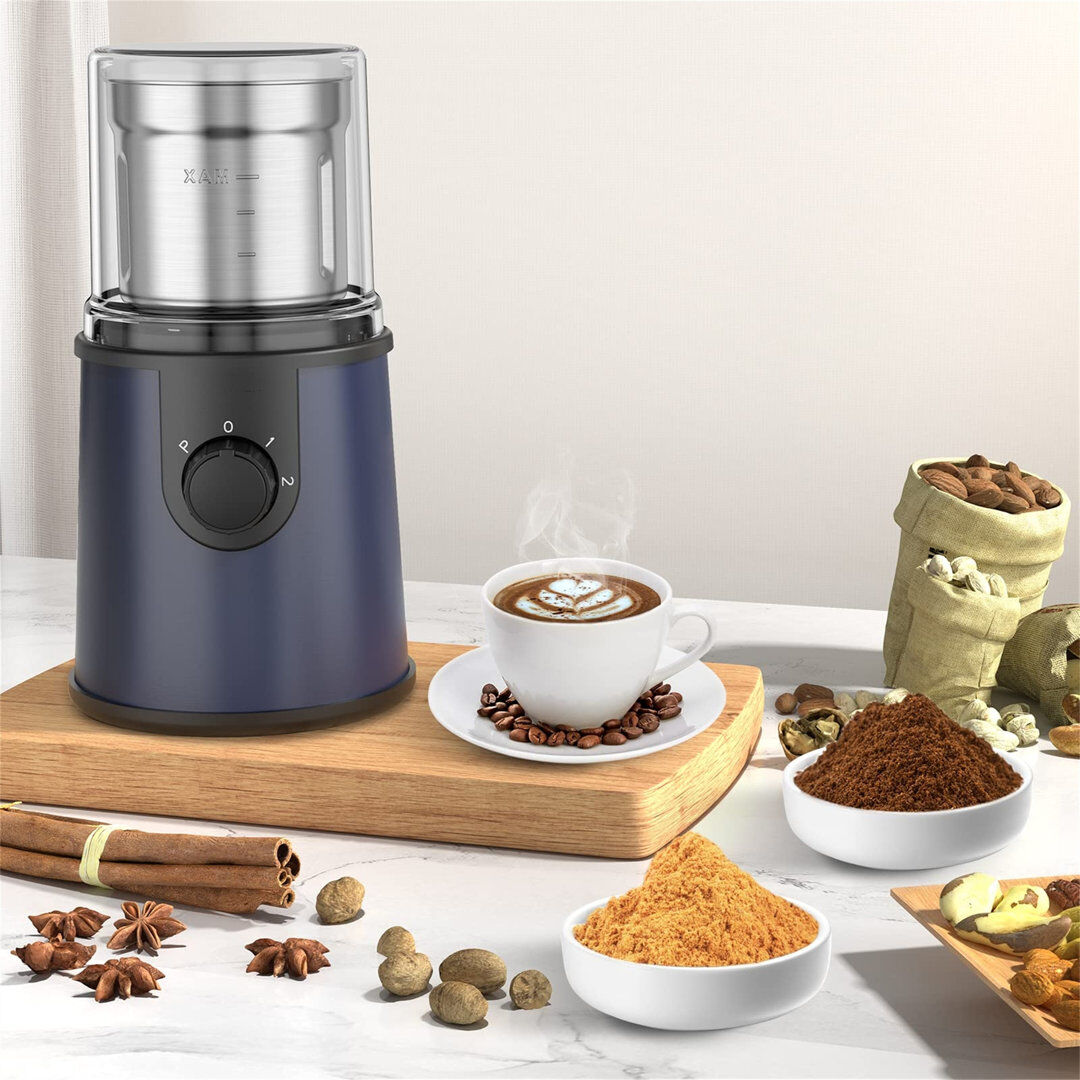
Chengdu Menghejia Technology Co., Ltd. Stainless Steel Electric Blade Coffee Grinder Blue 0mlThis electric coffee grinder is equipped with a 350W motor and SUS 304 stainless steel blades, which can complete the grinding task at a speed of 26000r/min in 5-20 seconds. The powerful motor can also easily handle larger and harder items, such as nuts, chia seeds and even nutmeg. The built-in overheat protection design prolongs its service life. This electric spice grinder has 2 grinding speed levels and 1 pulse mode (P). You can grind the ingredients that suit your taste as needed with a simple turn of the button.. This coffee grinder has a removable grinding bowl. Whether you want to mix whole spices or marinades, from delicate dried mint to fennel to pepper, this spice grinder is the best choice.. This electric spice grinder only works when the grinding bowl is locked in place and the lid is properly placed on the bowl.. This grinder is designed with a rubber seal to prevent the ground ingredients from flying out when the blade rotates. The base is equipped with non-slip rubber feet for good heat dissipation. The rubber layer can insulate.. The electric coffee bean grinder is equipped with a detachable grinding bowl, which allows you to easily pour out the powder and clean it with water. Equipped with a convenient double-headed brush spoon. The electric coffee bean grinder has a capacity of 80g, and the large capacity can better meet your needs. An ideal holiday gift or housewarming gift!. Brand Name: Chengdu Menghejia Technology Co., Ltd.. Finish: Blue70,99 £*Shipping: 0,00 £Secure redirect to the provider
-
What is independence and covariance in statistics?
Independence in statistics refers to the concept that the occurrence of one event does not affect the occurrence of another event. In other words, two events are independent if the probability of one event occurring does not change based on the occurrence of the other event. Covariance, on the other hand, measures the degree to which two random variables change together. It is a measure of the relationship between two variables, indicating whether they tend to increase or decrease together. A positive covariance indicates that the variables tend to move in the same direction, while a negative covariance indicates that they tend to move in opposite directions. **
-
What is the difference between contra and covariance?
The main difference between contra and covariance is the way they measure the relationship between two variables. Contra indicates an inverse relationship, meaning that as one variable increases, the other decreases. On the other hand, covariance measures the direction of the relationship between two variables, whether it is positive or negative. Contra is specifically used to describe the relationship between two securities in a portfolio, while covariance is a more general measure of the relationship between any two variables. **
-
Do outliers affect covariance, the correlation coefficient, or both?
Outliers can affect both covariance and the correlation coefficient. Outliers can have a significant impact on the covariance because they can pull the mean away from the center of the data, leading to a larger covariance value. Similarly, outliers can also influence the correlation coefficient by skewing the relationship between the variables, potentially increasing or decreasing the strength of the correlation. Therefore, it is important to be aware of outliers when interpreting covariance and correlation values. **
-
Is the square root of the covariance the variance?
No, the square root of the covariance is not the variance. The square root of the covariance is the correlation coefficient, which measures the strength and direction of the linear relationship between two variables. The variance, on the other hand, measures the spread or dispersion of a single variable. While both the covariance and variance are measures of variability, they are calculated and interpreted differently. **
* All prices are inclusive of VAT and, if applicable, plus shipping costs. The offer information is based on the details provided by the respective shop and is updated through automated processes. Real-time updates do not occur, so deviations can occur in individual cases. ** Note: Parts of this content were created by AI.